
Services
Kitchen Backsplash Tile
From full-height slab tile to handmade zellige, installed cleanly around outlets, windows, and range hoods.
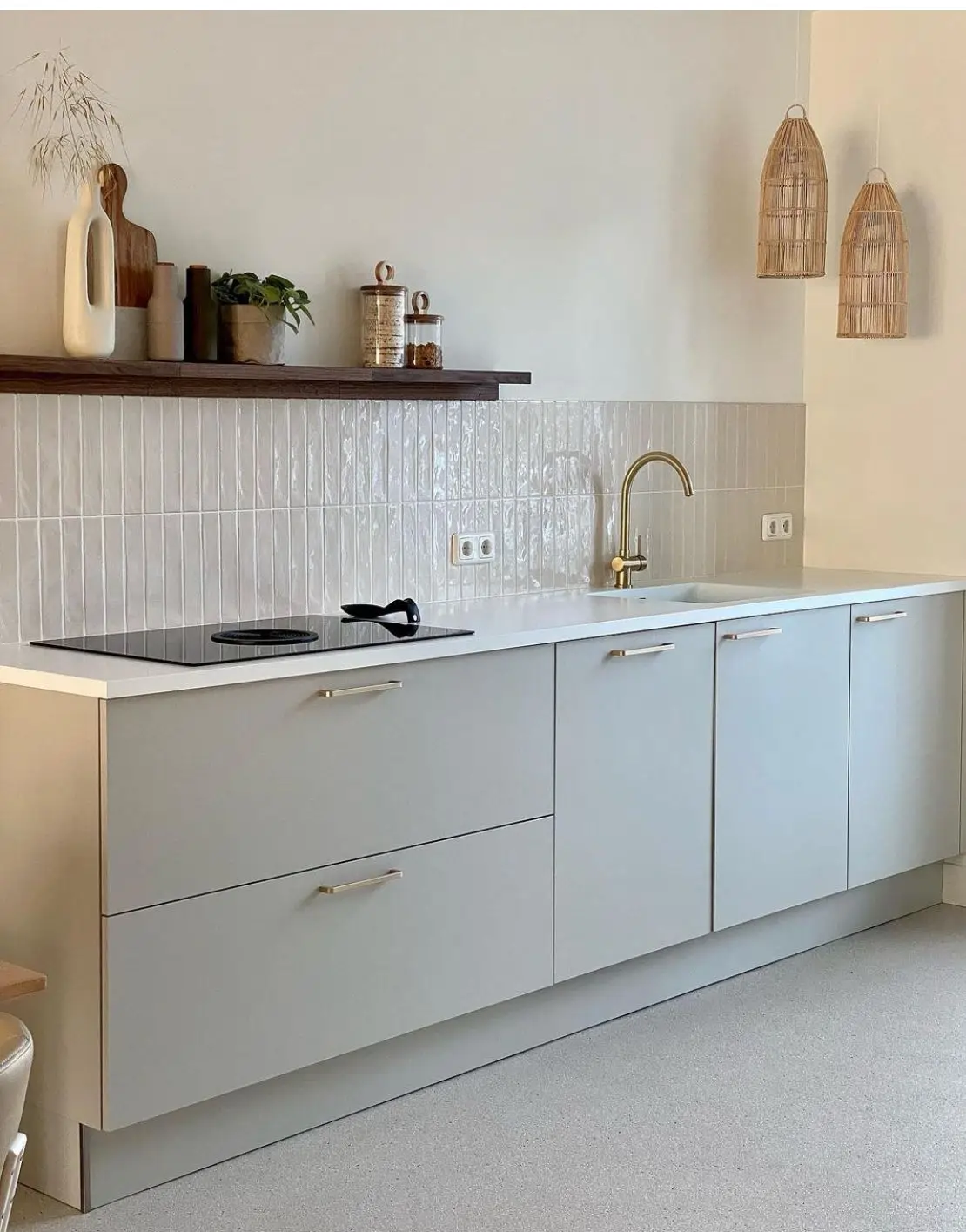
The Backsplash Is the Detail That Ties the Kitchen Together
A kitchen backsplash covers a relatively small area but sits at eye level, so every cut, every grout line, and every edge treatment is visible. We treat it accordingly.
The layout planning step is where the job gets set up correctly or incorrectly. For a standard horizontal subway tile run, we find the vertical center of the wall and work outward symmetrically so that the cuts at both ends match. For a stacked or vertical pattern, the starting point shifts. For a herringbone or chevron layout, the diagonal must be established off a true plumb line, not off cabinet edges, which are rarely perfectly square.
We also account for outlets, switch plates, window sills, and range hoods before any tile is cut. Surprises mid-install slow the job and waste material.
Tile Types We Install for Backsplashes
Each piece has slight dimensional variation. We set these with a slightly wider joint and use a flexible thinset to accommodate the irregularity without lippage.
Classic 3x6 or elongated subway in running bond, stacked, or vertical. Simple to look at, requires careful alignment to install without visible drift.
Porcelain slabs 24 inches wide or larger behind a range create an almost seamless look. These require a perfectly flat wall surface and full back-buttering.
Moroccan-style cement tile, encaustic tile, and mosaic sheets. Pattern matching and consistent spacing are the whole job here.
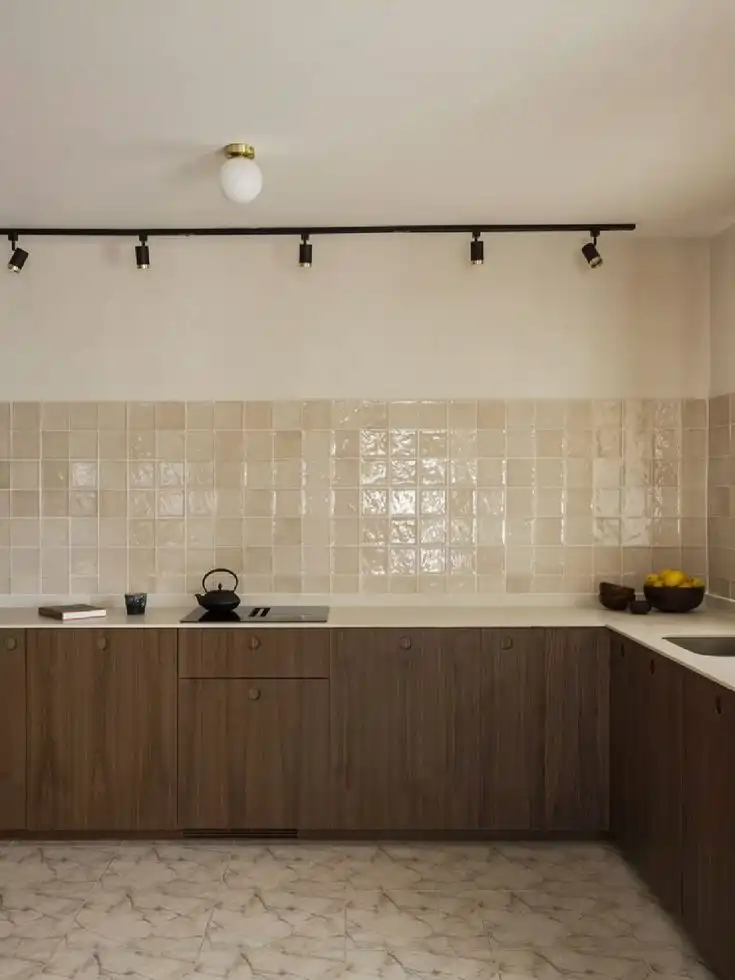
What the Install Looks Like
We start by removing outlet covers and switch plates, then cleaning the drywall or existing surface. If there is old tile to remove, we assess whether the drywall underneath is still in usable condition. Sometimes it needs to be replaced before new tile goes up.
Tile is set with a notched trowel appropriate to the tile size. Smaller mosaic pieces need a smaller notch to prevent squeeze-through into the grout joint. Larger tiles need a larger notch to ensure full coverage.
After mortar cures, grout is mixed and applied. Excess is cleaned with a damp sponge in the first hour before it hardens. We reinstall outlet covers once the grout is fully dry and apply grout sealer to cement-based grouts.
This Service Is Available In
Questions About Your Kitchen Project?
Reach us at (872) 335-3730 or fill out our contact form. We will follow up the same day.